








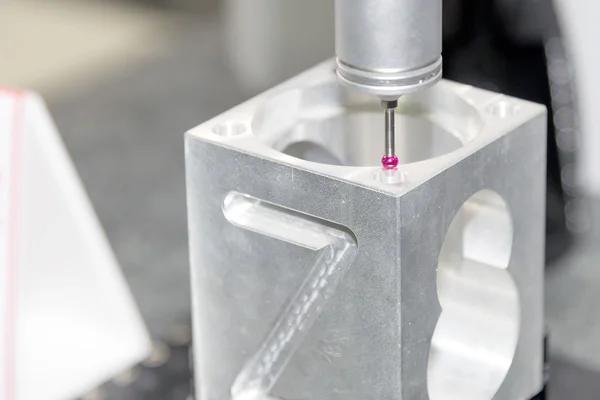
Coordinate Measuring Machines (CMMs) have become indispensable tools in modern manufacturing, playing a crucial role in ensuring precision, quality, and efficiency. These sophisticated devices are designed to measure the physical geometrical characteristics of an object accurately. By utilizing probes that touch or scan the surface of an item, CMMs collect data points to evaluate dimensions, shapes, and positional relationships. This capability is essential in industries where tight tolerances and high-quality standards are mandatory, such as aerospace, automotive, electronics, and medical devices manufacturing.
The primary function of a Coordinate Measuring Machine is to verify that manufactured parts conform to design specifications. This verification process helps manufacturers detect deviations early, preventing defective products from progressing down the production line and reaching customers. The integration learn more on this website of CMMs into quality control systems not only reduces waste and rework but also enhances product reliability, which is paramount in competitive markets. Furthermore, CMMs contribute to continuous improvement initiatives by providing accurate data that engineers and designers use to refine manufacturing processes.
Modern CMMs come in various configurations, including bridge, gantry, cantilever, and horizontal arm designs, each suited to different measurement tasks and part sizes. Additionally, advancements in sensor technology allow CMMs to perform contact, non-contact, and even optical measurements. Non-contact methods, such as laser scanning and white light sensors, enable rapid data acquisition on delicate or soft materials without causing any damage. Such versatility expands the range of applications and facilitates inspection of complex geometries that would be challenging to measure manually.
The integration of CMMs with computer-aided design (CAD) and computer-aided manufacturing (CAM) software streamlines the inspection process. By comparing measured data directly against digital models, manufacturers can quickly identify discrepancies and make informed decisions. This digital synergy also supports automation and real-time monitoring, enabling smart factories to maintain consistent quality while reducing human error. Moreover, many CMMs are equipped with user-friendly interfaces and advanced programming capabilities, allowing operators to customize measurement routines for specific parts and improve throughput.
In conclusion, Coordinate Measuring Machines serve as vital assets in modern manufacturing environments. Their ability to deliver precise, reliable measurements enhances product quality, supports process optimization, and drives innovation. As manufacturing technologies continue to evolve, the role of CMMs will likely expand further, integrating with Industry 4.0 initiatives and contributing to the development of smarter, more efficient production systems.